A Litter Box Cleaning Routine You Can Keep
A simple plan for scooping, washing and keeping your cat’s litter area comfortable and accessible.
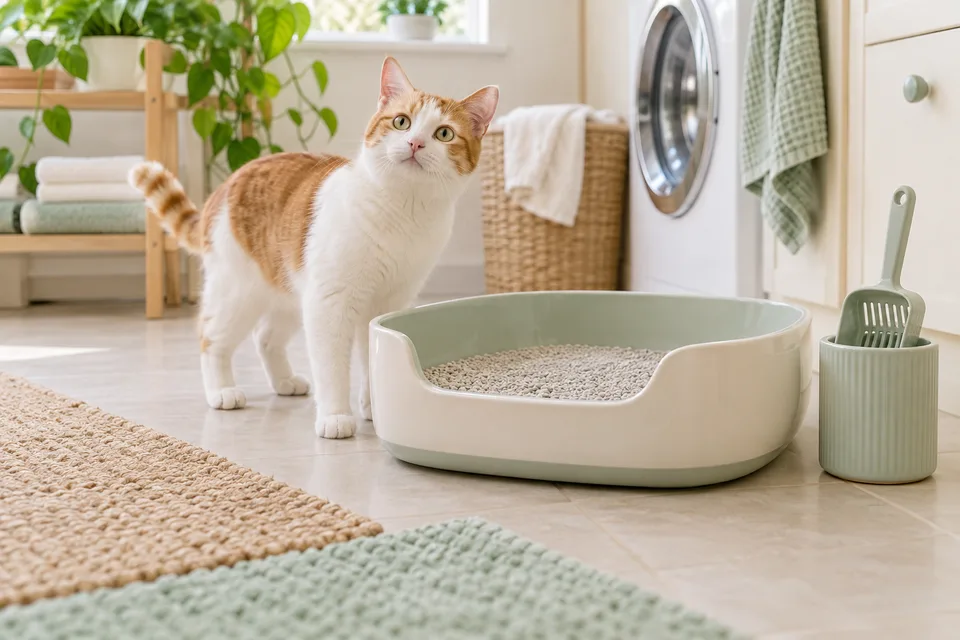
Illustrative AI-generated photography · Tail Notebook
The easiest litter routine is one you can repeat without hunting for a scoop or wondering whether someone else already cleaned the tray. Set up the tools first, then give the daily check a regular place in your household routine.
Keep the daily job small
Keep a dedicated scoop and suitable waste bags near the litter area, stored so children and pets cannot play with them. Cats Protection recommends removing urine and feces twice a day, with more frequent attention if a cat will not use a tray containing deposits.
Choose two moments you are likely to remember, such as after breakfast and before bed. In a shared household, leave a simple tick box near the supplies. Keep the cleaning tools separate from kitchen equipment and wash your hands after handling the tray or waste.
Plan a full tray wash
Cats Protection advises fully cleaning the tray at least weekly using hot, soapy water or a suitable cat-safe cleaner. Follow the directions for the exact product and litter you use. Rinse as instructed and let the tray dry before refilling it.
Put a spare bag of the usual litter on your shopping list before the current one runs out. That avoids an unplanned switch at cleaning time. A cleaning note can also record the last full wash, especially when several people share responsibility.
Notice access as well as cleanliness
A clean tray is less helpful if a closed door blocks it. Check access during ordinary household changes: visitors arriving, furniture moving or a laundry room being shut for cleaning. Keep a route available and avoid startling your cat while they use the tray.
Strongly scented litter and cleaning products may discourage tray use, according to the RSPCA. If a smell remains after cleaning, check the tray’s condition and the surrounding area instead of adding perfume.
Treat new toilet changes seriously
Do not punish a cat for toileting outside the box. A change can have different causes, so arrange veterinary advice rather than assuming your cat is being difficult. Difficulty passing urine or repeated straining requires urgent veterinary attention.
For a routine appointment, a brief record of when the change began and which trays were available can help the conversation. Do not delay care while you try to produce a perfect log.
Sources and next steps
Cleaning guidance: Cats Protection: cats and toileting. Scent and tray setup: RSPCA: litter tray advice. For the rest of the room, read our home and odor notes.