How to Tell When Your Dog Needs Space
Yawning, turning away and sudden stillness can be easy to miss. Learn to read your dog’s whole body and make room before a worried moment escalates.
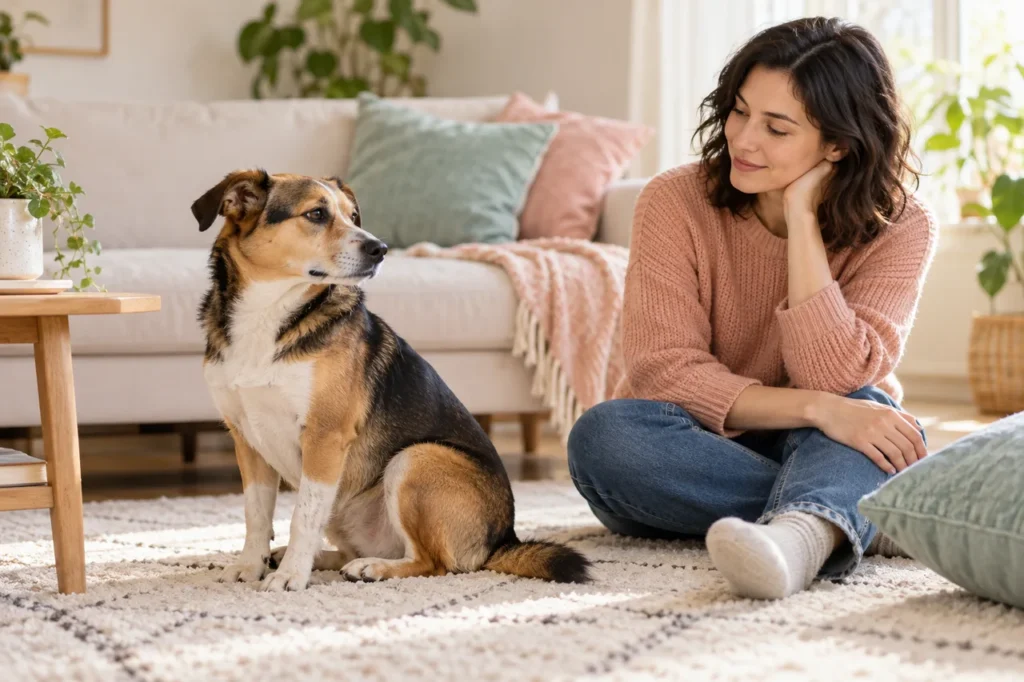
Illustrative AI-generated photography · Tail Notebook
A dog who needs a little space may not bark or growl. They might turn their head, lick their lips, pause suddenly or shift their weight away. Those small changes are easy to miss when you are focused on a greeting, a cuddle or getting a harness on.
Look at the whole dog and the situation around them. Then make it easy for them to move away.
Read several signals together
Dogs Trust describes body language as a combination of posture, facial expression and sound. A single yawn can mean the dog is tired. A lip lick can happen around food. These gestures tell you more when they appear alongside a tense body, ears held back, turning away or repeated attempts to leave.
Notice what happened just before the change. Did someone lean over the dog? Did a visitor reach toward their face? Is another dog approaching quickly? Context can help you see what the dog is responding to, though it does not prove exactly what they feel.
Signs your dog may want more room
- Turning the head or body away, leaning back or moving behind you.
- Licking the lips when there is no food, yawning when they are not tired, or blinking and narrowing the eyes.
- Lowering the body, holding the tail low or tucking it, pulling the ears back, or becoming very still.
- Pacing, panting when it is not hot, trembling, hiding or refusing a treat they usually enjoy.
Some dogs move straight to a growl, snap or attempt to escape. Others show a few quiet signals first. Dogs Trust notes that dogs vary, and that health, past experience and the immediate setting can affect what you see. A wagging tail alone does not tell you that a dog welcomes contact.
What to do in the moment
- Pause your approach. Stop reaching, bending over or moving closer. Give the dog a clear route away.
- Add distance calmly. Step back, turn slightly sideways and let the dog choose whether to re-engage. On a walk, make a wider arc or move behind a parked car or other safe visual barrier.
- Ask others to wait. Give children and visitors a simple instruction: leave the dog alone while they move away or settle in their own space.
- Keep the choice available. At home, use a gate or quiet resting area so the dog can take a break without being followed.
Do not corner or restrain a worried dog to finish a greeting. Avoid scolding a growl. It is a warning that the dog is uncomfortable, and punishment can make it harder to notice how they feel.
Look for patterns after the moment passes
If the same situation keeps causing concern, jot down what happened, how close the trigger was and what your dog did. A simple note such as “turned away when a guest leaned over the sofa” is more useful than calling the dog stubborn. Use the notes to change the setup: give guests more distance, block access to a busy doorway or let the dog rest before visitors arrive.
A dog’s comfortable distance can change with the setting. A familiar person in a quiet room may be easy to handle, while a stranger reaching out in a crowded place may be too much. Give more space when the dog is tired, unwell or already dealing with a busy day.
When to ask for help
A sudden change in how your dog responds to touch, handling or familiar people can have a medical cause. Ask your veterinarian to check for pain or illness. If fear, growling, snapping or attempts to bite are recurring, keep people and animals safely apart and ask your veterinarian for a referral to a qualified reward-based behavior professional.
For a related guide to consent during everyday contact, read how to read a cat’s body language before petting. You can also use Daily Care Routines to plan quieter breaks into the day.