A Gentler Brush-and-Paw Routine for Your Dog
Keep everyday grooming calm with a suitable brush, a comfortable place to stand and a brief check of the paws.
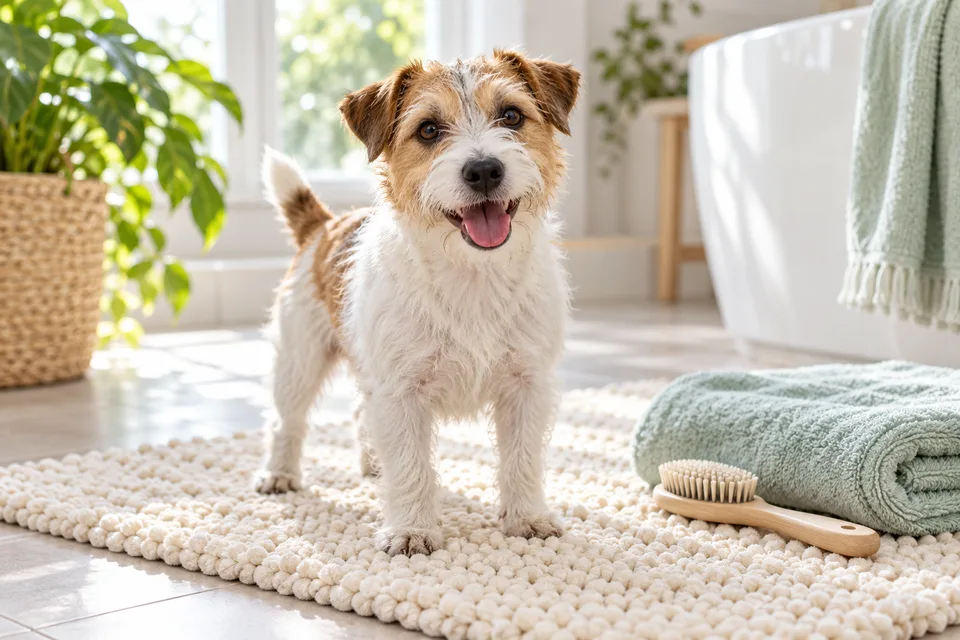
Illustrative AI-generated photography · Tail Notebook
A dog does not need to finish a full grooming checklist in one sitting. A quiet moment with an appropriate brush can be a useful starting point, especially when you are still learning what your dog tolerates comfortably.
Prepare before inviting your dog over
Choose a stable, non-slip place at floor level. Put the brush and a clean towel within reach so you will not have to leave midway through the session. Ask your groomer which brush suits your dog’s coat; one tool is not suitable for every coat type.
Try the routine when you have enough time to stop. If you are rushing to leave the house, settle for putting the equipment away and choosing a calmer moment. A predictable location and a short session are easier to repeat than an elaborate setup.
Brush a comfortable area first
Begin with an area your dog normally accepts being touched. Use light strokes and avoid pulling through a snag. The ASPCA notes that brushing methods and frequency depend on coat type. Thick, long and easily tangled coats may need a different plan from a smooth, short coat.
Check your tool as you go. If you are pressing hard to make it move, stop and reassess rather than pulling harder. Leave tight mats or anything close to tender skin to a professional groomer or veterinarian. Do not cut into a mat with household scissors.
Make the paw check brief
If your dog is comfortable with handling, look for visible dirt or something caught between the toes. Check without digging, squeezing a sore area or trying to remove an embedded object. Limping, swelling, bleeding or repeated attention to one paw calls for veterinary advice.
You can separate looking at a paw from nail trimming. Keeping those jobs distinct is useful while a dog learns to accept gentle handling. Ask a professional for a demonstration before attempting unfamiliar grooming tasks.
Let behavior guide the stopping point
Watch your dog throughout the session. Moving away, freezing, trembling, growling or snapping are reasons to stop and give space. Do not hold a frightened dog down to complete a cosmetic task. A veterinarian can help assess pain; a suitably qualified behavior professional can help with a handling plan.
Keep a short note afterward: brush used, area your dog accepted and where you stopped. This gives you something concrete to discuss with a groomer. “Comfortable with two strokes on the shoulder” is more useful than “bad at grooming.”
Sources and next steps
Coat and handling guidance: ASPCA: dog grooming tips. For choosing help, see the RSPCA guide to choosing a dog groomer. Explore more daily care notes.