A Fresher Pet Home Starts with the Source
A practical room-by-room reset for bedding, soft furnishings and everyday pet smells, without relying on fragrance.
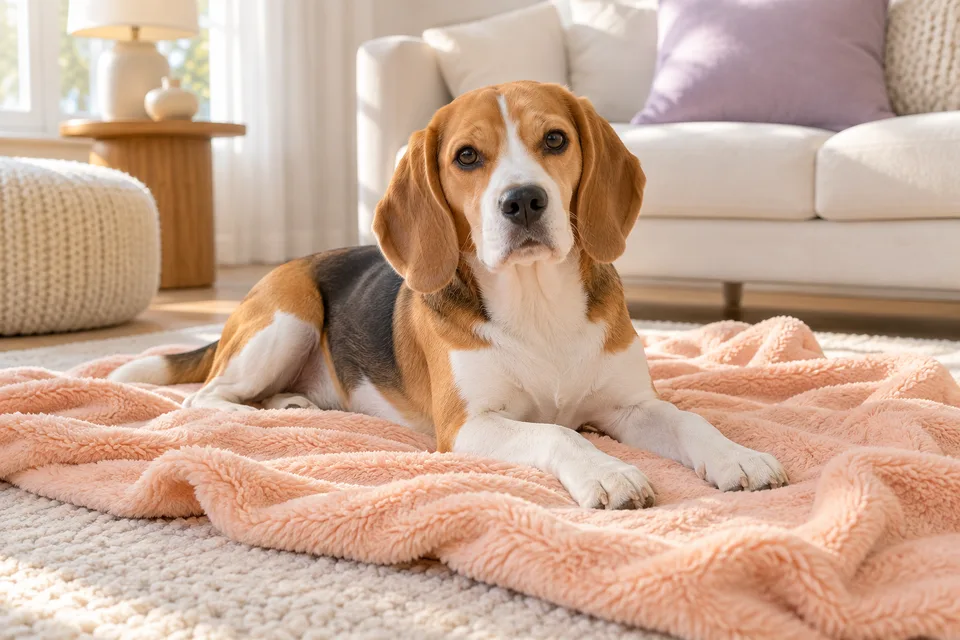
Illustrative AI-generated photography · Tail Notebook
When a room smells stale, it is tempting to add something that smells stronger. A more useful first step is to find the material holding the odor. Work through one small area at a time, so you can tell which change helps.
Begin with your pet’s favorite spot
Look at the places your pet uses most: a blanket folded on the sofa, the corner of a bed, a rug beside the door. Read washing labels before removing covers. Vacuum loose hair and dry debris, then wash suitable textiles according to their care instructions.
Keep a second washable cover ready if you can. It lets your pet use a familiar resting area while the first cover dries. Do not put a damp cushion back inside a cover simply to finish the job faster. Note which items take longest to dry, and plan those for a day when the household can leave them undisturbed.
Handle accidents as a separate job
For a new accident, keep the animal away and remove the mess promptly. Choose a cleaner labeled for the affected material and the type of stain. Test an inconspicuous area and follow the product’s instructions for application, contact time, rinsing and drying.
Enzyme-based products are not permission to let pets lick a treated surface. The ASPCA advises allowing enzyme-cleaned areas to dry before pets return. Keep the original packaging so you can check the directions again. Never mix cleaners, and do not add a second product because the first has not finished working.
Create a realistic cleaning rotation
A short checklist can separate daily pickup from larger washing jobs. Put “remove visible mess” and “check litter trays” on the frequent list; place “wash the sofa cover” on a schedule based on actual use and the fabric label.
For a trial week, write down the room, the item cleaned and whether the smell returned. This is a household troubleshooting note, not a hygiene score. If the smell comes back only after one blanket is replaced, you have a more specific problem to investigate than “the whole house smells.”
Choose ventilation over added perfume
Use ventilation when conditions make it practical and safe. Secure windows and doors so cleaning does not create an escape route. Keep cleaning supplies closed and stored beyond your pet’s reach. Avoid assuming a product is harmless because it is sold as natural.
A new or persistent odor coming from your pet’s skin, ears, mouth or urine needs veterinary attention. Cleaning the room cannot treat an underlying health problem.
Sources and next steps
Product safety: ASPCA: poisonous household products. For the litter area, explore Cleaning & Hygiene.